Best Questions to Ask Before Hiring a Branding Agency or Freelancer
Hiring a branding agency? Ask these questions to avoid vague scope, design-by-committee, source file surprises, and rollout failures that kill ROI.


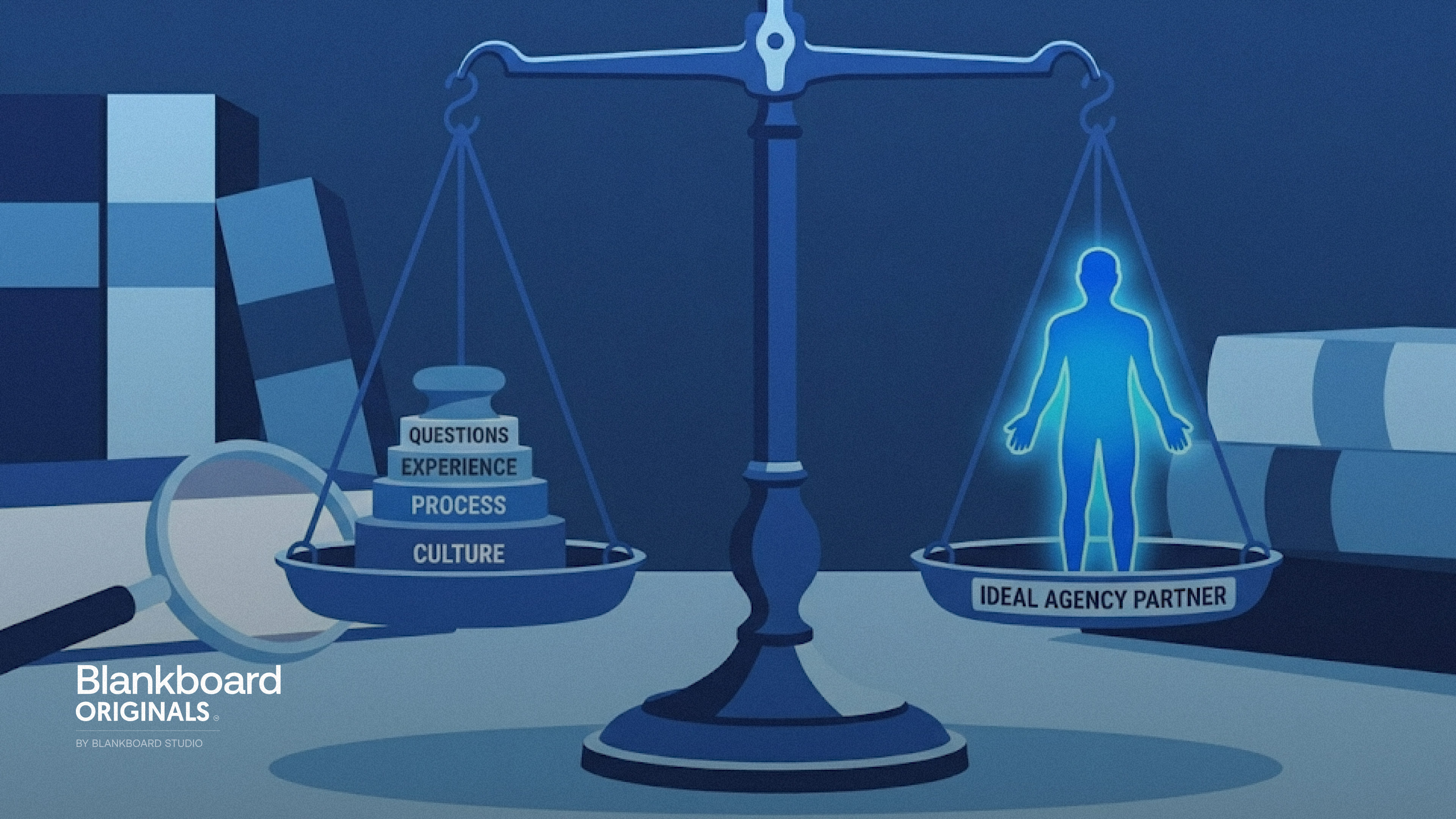
1. Why Asking the Right Question Matter
Hiring a branding partner is not a creative decision, it is a business risk decision. Most teams get burned the same way, they buy “good taste,” then discover the work does not translate into pipeline, pricing power, or internal adoption. That is why the questions to ask before hiring a branding agency or freelancer matter, they expose capability, incentives, and execution risk before you sign. If you are asking what to ask Branding Agency before hiring, the answer is simple, stop interviewing for aesthetics, interview for outcomes.
If a partner cannot define success, you will not get it. A serious operator sets measurable targets and validates them after launch, not just at the reveal. How you define and measure brand success is not a strategy detail, it is the baseline for whether this engagement is going to produce leverage or just assets.
The next failure mode is ownership. Payment does not automatically equal control. If the contract is loose, you can end up unable to edit, extend, or re-use what you paid for without paying again. The clean fix is making ownership explicit in the agreement, including editable source files and usage rights, with work for hire handled clearly.
This guide is built to pressure test a partner fast:
- Separate strategy from decoration
- Validate process quality, not promises
- Confirm who actually does the work
- Lock down IP ownership, scope, and pricing incentives
- Ensure handoff and rollout do not collapse after delivery
2. First, get clear on what you actually need
Do not start by interviewing agencies. Start by defining the problem in a way that makes the wrong partners disqualify themselves.
When the brief is fuzzy, the scope balloons, the timeline slips, and you end up approving work you cannot defend internally. Branding projects fail less from “bad creative,” and more from unclear constraints and unclear decision rights.
2.1 Define the business context
Your business stage determines what “good” looks like. Budget tolerance, speed requirements, stakeholder count, and how much system you can actually operationalize.
Here is the operator shortcut. Match the partner to the constraints, not the ambition.
If you are early stage, branding should look like a deployable package, positioning, a usable identity, and the minimum set of assets required to sell and recruit. That is the whole point of minimum viable branding.
Use these as your first filter questions:
- “What do we ship in the first 2 to 3 weeks that goes live?”
- “What do we deliberately not do yet, and why?”
- “What breaks if we pivot in six months, and how do you design for that?”
2.2 Define the trigger
Branding is not one thing. The trigger tells you what kind of operator you need.
- Rebrand because growth stalled: you need diagnosis, differentiation, and messaging that reduces friction in the funnel. Not a new color palette.
- Repositioning: you need category framing and a clear promise that sales can repeat without translating.
- Pivot: you need a bridge story, what stays true, what changes, and how trust survives the transition.
- M&A: you need architecture and sequencing, what carries over, what gets renamed, what gets retired, and how you avoid two competing brands inside one org.
- New product launch: you need speed, testing, and cut-through, plus rules that scale after week one.
If M&A is even remotely on the table, brand architecture is not a creative debate, it is an operating model choice that dictates rollout cost and complexity. This decision often comes down to branded house vs house of brands , and everything downstream, naming, messaging, websites, sales decks, and internal adoption, follows from that choice.
3. Questions that prove they can do strategy, not decoration
Most branding agency interview questions fail because they only test taste. You need to test decision quality. The goal is simple, confirm they can diagnose, choose tradeoffs, and ship a system your team will actually use.
Use this section like a branding agency checklist. For every question, you are listening for two things:
- Specificity, names, steps, numbers, artifacts, owners
- Causality, what decision this unlocks, what changes after we learn it
3.1 Research and insight
These are the branding agency discovery call questions that reveal whether they reduce uncertainty or just sell confidence.
A strong partner can describe their research in a way that is boring and operational. That is a good sign.
What you should see by the end of research
- A short list of positioning hypotheses, usually 2 to 4, each with tradeoffs
- A clear view of what customers value, what they ignore, what they mistrust
- A reality check on category language, competitor claims, and where differentiation is even possible
- A list of risks and assumptions that get validated before design gets polished
3.2 Positioning, messaging, and differentiation
This is the core of how to choose a branding agency. If they cannot force tradeoffs, they cannot create a brand that performs.
What to ask, and what a good answer includes:
- “What is the tradeoff you would force us to make to be meaningfully different?”
Good answer includes, who we are for, who we are not for, what we will not compete on, what we want to be hired for. - “What do we stop saying after this project?”
Good answer includes, a shortlist of banned phrases, and what replaces them. - “How do you translate positioning into sales ready messaging?”
Good answer includes, a messaging hierarchy, proof points, and examples of how it becomes web copy, pitch decks, outbound, and product pages. - “Show me how you handle internal disagreement on positioning.”
Good answer includes, decision owners, review cadence, and how they prevent endless concept churn.
Your evaluation shortcut
A strong answer will sound like a decision memo, not a creative pitch:
- One sentence positioning that a non marketer can repeat
- Three proof points the market will actually believe this year
- One clear tradeoff that rules out a chunk of the market
- A messaging hierarchy that makes execution easier, not harder
If they keep everything open, “premium, modern, innovative,” you are not buying positioning. You are buying nicer adjectives.
3.3 Measurement and success criteria
If they cannot define success, you cannot manage the project. This is a key part of your branding agency selection criteria.
What to ask, and what you should expect:
- “What changes if this works, and what does not change even if the design is great?”
Good answer includes leading indicators, lagging indicators, and a timeline for each. - “What baseline do we capture before kickoff?”
Good answer includes a measurement plan that does not depend on hope. - “How do you separate brand impact from channel spend?”
Good answer includes clear attribution limits and consistent time windows.
At minimum, they should be comfortable setting a baseline for unaided recall and aided recognition, then tying additional metrics to your funnel.
A practical scorecard you can demand in the proposal
- Awareness, branded search trend, direct traffic quality
- Consideration, conversion rate on high intent pages, win rate movement
- Sales efficiency, sales cycle length, discounting trend
- Retention, churn trend, expansion signals
- Internal adoption, asset usage, consistency across channels
4. Questions that reveal process quality, and whether it will stay on track
Most branding projects do not fail in the creative work. They fail in the process. Vague scope, messy feedback, unclear decision rights, and timelines that pretend stakeholders do not exist.
If you want a clean outcome, your branding agency proposal questions need to pressure test execution, not taste.
4.1 Methodology and deliverables
Ask for the branding process steps in plain language, and make them name what you get at the end of each phase.
Scope only works when it is written down, including deliverables, roles, acceptance criteria, and change control, which is exactly what a statement of work is for.
Operator move: force clarity on revisions.
- “How many rounds per phase?”
- “Who consolidates feedback?”
- “What happens if stakeholders introduce new requirements after approval?”
- “What is your change order mechanism, and how fast can you price it?”
4.2 Stakeholder management and decision-making
This is where good work dies. Too many voices, no owner, feedback arrives as scattered opinions, and the agency starts designing for politics.
Ask:
- “Who is the single decision maker on our side, and how do you want decisions to run?”
- “What is your process for stakeholder input without turning it into committee design?”
- “How do you handle internal disagreement, and what do you do when consensus is not possible?”
- “What is the cadence, weekly check-ins, async reviews, decision meetings?”
- “What does a clean feedback cycle look like in your world?”
What good looks like:
- One accountable owner, not five “final reviewers”
- A structured input phase, then a narrower approval phase
- Feedback consolidated into one doc, one voice, one deadline
- Decisions made against a brief, not personal preference
If you want to kill confusion fast, use a RACI ( Responsible, Accountable, Consulted, Informed) that defines who is Responsible and Accountable.
4.3 Timeline realism
Timelines are where weak teams lie. Not maliciously. They just quote a schedule that ignores client reality, legal review, stakeholder availability, and content dependencies.
Ask:
- “What typically slows projects down, and how do you de-risk those steps?”
- “What is the critical path, and what inputs do you need to keep it moving?”
- “Where do you expect us to be the bottleneck, and how do we prevent that?”
- “If we need to move faster, what gets cut, not compressed?”
Branding agency checklist for timelines
- Is there a kickoff brief with owners and deadlines?
- Is there a weekly status rhythm with risks called out?
- Are approval gates explicit, with what gets locked at each gate?
- Is there a change process when scope changes, not silent chaos?
5. Questions about the team you are actually hiring
A strong pitch deck means nothing if the work gets handed to juniors you never met. One of the most practical branding agency selection criteria is simple, confirm who does the work, how they work, and what happens when reality hits.
5.1 Who is on the account, and who is accountable
Ask:
- “Who is the day-to-day lead, and who is the final decision maker on your side?”
- “Who is doing strategy, who is doing design, who is doing writing?”
- “How many active clients does that lead carry at once?”
- “What is your response time and escalation path when we are blocked?”
What a good answer looks like
- Named people, specific roles, and clear accountability
- A real senior person involved beyond kickoff
- A simple cadence, weekly status, async review, decision meeting when needed
- A plan for bottlenecks, not optimism
Red flags
- “We will assign the team after you sign.”
- “Our senior team oversees everything,” but cannot name who does what.
- A lead who is spread across too many accounts to think.
5.2 Outsourcing and quality control
Outsourcing is not automatically bad. Hidden outsourcing is.
Ask:
- “Do you outsource any component, strategy, naming, copy, design, production?”
- “If you use contractors, how do you manage quality and consistency?”
- “Can you show me how you review work internally before it reaches us?”
- “Where have outsourced components caused risk in past projects, and what did you change?”
What good looks like
- Transparency, clear ownership, and a review pipeline
- One person responsible for integration, not a loose network
- A consistent standard for naming, tone, and systems, not patchwork
5.3 Continuity, documentation, and handover if people change
People leave. Priorities shift. If the partner cannot preserve knowledge, your project becomes fragile.
Ask:
- “What happens if the lead leaves mid-project?”
- “How do you document decisions so we do not re-litigate them later?”
- “What do we receive so we can operate without you, if we need to?”
- “How do you ensure the work survives internal changes on our side?”
If you want a simple test, ask for one thing:
- “Show me an example of how you document decisions and deliverables so a new team can pick it up without chaos.”
6. The contract and commercial questions most people forget, but regret later
This is where “great creative” turns into long-term friction. Rights, risk, incentives, and scope controls decide whether you get a usable brand system, or a dependency you keep paying for.
6.1 IP ownership and source files
If you cannot edit it, extend it, or re-use it without permission, you do not own it in any meaningful way. Lock this down before the first concept is shown.
Ask:
- “Do we own the final outputs, and do we own the underlying working files?”
- “Do we get editable source files, and which formats exactly?”
- “What is excluded from ownership, fonts, stock, third-party assets, AI generated elements?”
- “Can we modify and reuse everything in future campaigns without paying again?”
- “What happens to ownership if we terminate early?”
Make the contract explicit, not implied, especially around work made for hire.
Source files checklist, name them in the contract
- Design files, the actual formats they work in
- Master logo files, vector formats, lockups, and variations
- Brand guidelines, editable and final
- Templates, social, pitch, email, docs
- Asset library, icons, illustrations, motion files if included
- Licensing list, fonts, stock, and usage rights
6.2 Trademark clearance
Domain availability is not clear. A quick search is not a clearance. If naming is part of scope, you need a clear risk owner.
Ask:
- “Who runs preliminary checks, and what is the process?”
- “Who pays for legal clearance, and when does it happen?”
- “If the name fails clearance, what happens to the timeline, cost, and deliverables?”
- “Do we develop multiple name routes in parallel to reduce failure risk?”
If naming is in scope, checking for conflicts is non-negotiable, including searching existing marks before committing.
6.3 Pricing models and incentives
This is the hidden engine behind behaviour. Your goal is to pick a model that rewards clarity and speed, not vagueness and delay.
Ask:
- “Is this fixed fee, hourly, retainer, or value-based, and why?”
- “What is included, what is excluded, and what triggers a change order?”
- “How do revisions work, and what counts as a new direction?”
- “What is your rate card for out-of-scope work?”
Incentive check, what each model rewards
6.4 Hidden costs and scope creep
Most surprises are predictable. They just are not written down.
Ask the blunt question:
- “What is not included that we will almost certainly need?”
Common hidden costs:
- Fonts and licensing, stock, photography, video
- Copywriting, naming, tone of voice work
- Web implementation support, templates, component libraries
- File management, version control
- Internal rollout, training, governance, adoption support
- Extra stakeholder rounds, extra concepts, late-stage direction changes
7. Operational execution, handoff, and rollout
This is where good brands die. Not because the work is bad, but because nobody can find the files, nobody knows what “correct” looks like, and every team improvises. If you want a brand that performs, handoff is not admin, it is the product.
7.1 Handoff, what you should get, and what “complete” looks like
Ask:
- “What exactly do we receive at handoff, in which formats, and where does it live?”
- “Do we get a clean folder structure, naming conventions, and version control?”
- “What do we need to run day one without you?”
- “What is the minimum set of brand guidelines deliverables, and what is optional?”
A good handoff includes a usable checklist, not just a PDF:
- Master logo files, lockups, color variants, and usage rules
- Typography rules, licensing list, fallback guidance
- Color system, accessibility rules, and digital usage constraints
- Templates, social, sales decks, docs, email signatures
- Image and illustration rules, do’s and don’ts that prevent drift
- A simple “how to build new assets” rule set, not just “how to use existing ones”
7.2 Digital guidelines beat PDFs when the brand needs to live
Static PDFs get outdated fast. Teams copy old files, rules get ignored, and inconsistency becomes normal. A single source of truth with digital brand guidelines that stay current and searchable reduces drift because updates propagate and people stop guessing.
What to ask:
- “Is our guideline system editable, searchable, and versioned?”
- “Who can update it, and what is the governance rule?”
- “Can we embed templates and approved assets directly inside it?”
7.3 Rollout and internal adoption
A brand is only real when sales, marketing, product, and HR use it without friction.
Ask:
- “What is your rollout plan, week by week?”
- “Do you provide internal training, office hours, and a Q&A channel for the first 30 days?”
- “What does adoption look like, and how do we spot drift early?”
- “What do you do when teams keep going off-brand, and why does that happen?”
If you want consistency, you need governance that people actually follow. A single source of truth prevents five teams from inventing five versions of “the brand” in five weeks.
8. Agency vs freelancer, how to choose based on risk and scope
Most people pick based on brand and charisma. Operators pick based on risk, scope, and failure cost.
If you are asking how to choose a branding agency, start with this rule. Buy redundancy when failure is expensive. Buy focus when speed matters. This is the fastest way to decide between a branding agency, a brand consultancy, or a freelance brand designer.
8.1 When a freelancer is the right call
A freelancer is a good fit when you already have clarity and you need execution.
Choose a freelancer if:
- You have a clear positioning direction and need brand identity execution
- Scope is contained, logo system, basic guidelines, a small set of templates
- You need speed, fewer stakeholders, fewer meetings
- You want one accountable person, not a multi-layer team
What you should expect from a strong freelancer:
- A tight scope, clear deliverables, clear revision rounds
- Fast iteration, direct communication, fewer handoffs
- Practical handoff, organized files, templates, usage rules
What breaks with freelancers:
- Capacity limits, one person can bottleneck fast
- Lower redundancy, if they get sick or overloaded, you slip
- Less depth across strategy, naming, copy, rollout support, unless you add specialists
8.2 When an agency is the right call
An agency is the right call when you need cross-functional depth and the cost of mistakes is high.
Choose an agency if:
- You need strategy, identity, messaging, and rollout working together
- You have multiple stakeholders and you need structured alignment
- You need speed at scale, parallel workstreams, research plus design plus copy
- You need governance, training, implementation support, ongoing updates
What you should expect from a strong agency:
- A clear methodology, clear gates, and real stakeholder management
- A team that can handle complexity without chaos
- Documentation, rollout planning, and adoption support, not just a reveal
What breaks with agencies:
- Bait and switch staffing, senior in pitch, junior in delivery
- Process bloat, too many workshops, too few decisions
- More overhead, more coordination, more cost if scope is vague
8.3 Simple decision table you can actually use
Use this as your branding agency checklist before you decide.
8.4 The questions change depending on who you hire
If you hire a freelancer, ask:
- “What is your branding deliverables list, in formats, quantities, and timelines?”
- “How do you handle overflow, do you bring in specialists, or do we?”
- “What is your handoff structure so we can operate without you?”
If you hire an agency, ask:
- “Who is the day-to-day team, and who is accountable for outcomes?”
- “What are your decision gates, and what gets locked at each gate?”
- “How do you prevent committee feedback from wrecking the work?”
9. Red flags to spot during the pitch, before you sign
If you want a clean answer to how to hire a branding agency, assume the pitch is engineered to feel safe. Your job is to stress test reality. These branding agency red flags show up early, and they predict pain later.
9.1 Fast diagnostic, spot the failure mode in 10 minutes
9.2 The “yes person” problem
If they never push back, you are not hiring a partner. You are hiring a mirror.
What a strong answer sounds like:
- “Here is what I would challenge in your brief.”
- “Here is the tradeoff you are avoiding.”
- “Here is the decision you need to make before design can work.”
Weak answer:
- “We can do anything you want.”
9.3 Pretty work, no business explanation
A portfolio can hide anything. Your question is not “is it nice,” it is “why did it work.”
What you should expect:
- The business problem, the decision they drove, the constraint they navigated
- What changed in messaging, audience focus, or category framing
- What they would do differently now
If they cannot explain outcomes without leaning on taste, they are not doing strategy.
9.4 Process theater and design by committee
A common trap is selling you “collaboration,” then drowning you in feedback loops where every opinion counts the same. That is design by committee, and it kills timelines and quality.
What you should expect instead:
- One decision owner on your side
- Consolidated feedback, one voice, one deadline
- Clear gates, what gets locked, what stays flexible
9.5 Unlimited revisions and fuzzy scope
Unlimited revisions is not generosity. It is a sign the scope is unclear and the decision process is broken. That turns into scope creep, budget drift, and stakeholder fatigue.
What you should expect instead:
- Defined rounds per phase
- Clear acceptance criteria
- A change order process when direction changes
9.6 The staffing bait and switch
If the senior people run the pitch but cannot name who does the work, expect a handoff to juniors after signature.
What you should demand:
- Named day-to-day team before you sign
- Role clarity, who owns strategy, design, and writing
- A continuity plan if someone leaves
9.7 Reference silence
A confident partner can provide recent references quickly, because they manage relationships well and deliver consistently.
If they stall, dodge, or only offer curated highlights from years ago, treat it as a signal, not an inconvenience.
10. Final checklist, copy-paste questions you can use today
This is the version you can drop into an email, proposal doc, or kickoff agenda. It is built for operator speed. Use it as a branding agency checklist and score each answer.
10.1 Copy-paste question list
Strategy
- “What do you research first, and what decision does it unlock?”
- “Who do you interview, how many, and why that sample?”
- “What tradeoff will you force us to make to be meaningfully different?”
- “What do we stop saying after this project, and what replaces it?”
- “What is our one sentence positioning, and what proof supports it this year?”
- “What does success look like in 60, 120, and 365 days?”
Process
- “Walk me through your phases, and what we receive in each.”
- “What are the standard deliverables, and what is optional?”
- “What does approval mean at each gate, and what gets locked?”
- “How many revision rounds per phase, and what counts as a new direction?”
- “What inputs do you need from us, and what is the critical path?”
Team
- “Who is the day-to-day lead, and can we meet them before signing?”
- “Who does strategy, who does design, who does writing?”
- “Do you outsource anything, and how is quality controlled?”
- “What happens if someone leaves mid-project, how do you handle continuity?”
Commercial and risk
- “Do we own the final outputs and the editable source files?”
- “What is excluded from ownership, fonts, stock, third-party assets?”
- “Who handles naming checks and trademark clearance, and what happens if it fails?”
- “Is pricing fixed fee, hourly, retainer, or value-based, and what does it incentivize?”
- “What is not included that we will almost certainly need?”
Handoff and rollout
- “What exactly do we receive at handoff, formats, structure, location?”
- “Do we get templates that make it easy to stay consistent?”
- “What is your rollout plan, and do you support training and adoption?”
- “How do you prevent drift after launch, and who owns governance?”
10.2 Simple scoring rubric
Use a 1 to 5 scale per category, then total it. This helps multiple stakeholders evaluate consistently.
